Briefly, tell us what brought you to CPC.
Hello again, CPC Friends! I’m honored to have been elected board president and to return as an active leader with a renewed commitment to CPC’s land protection and stewardship mission. Many of you know me from my previous role as the organization’s executive director from 2012 to 2022. I hope to draw on that experience and institutional knowledge to provide stability, leadership, and support as CPC enters its next phase of
growth under the direction of Executive Director Peggy Fogarty. As board president, I look forward to focusing on strong governance and sound policy to ensure the organization’s long-term sustainability and effectiveness.
What are a few things you’d like to accomplish as board president?
In the area of board leadership, I plan to provide training on Land Trust Standards and Practices, encourage active engagement and leadership succession, strengthen our committee structure, and help develop comprehensive organizational policies that support efficient operations and responsible growth.
On the land protection front, my goal is to help strengthen CPC’s strategies and increase the pace of conservation by expanding our funding capacity. This means working closely with municipalities, counties, state and federal agencies, private foundations, and major donors to address the urgent demand to permanently protect our region’s most valuable natural resource lands. In the face of unprecedented growth and development pressure, conservation is no longer simply a “nice to have”—it is a “must have.” We must continue to build our resources so we can protect the best of what remains.
What project are you most proud of from your previous work with CPC?
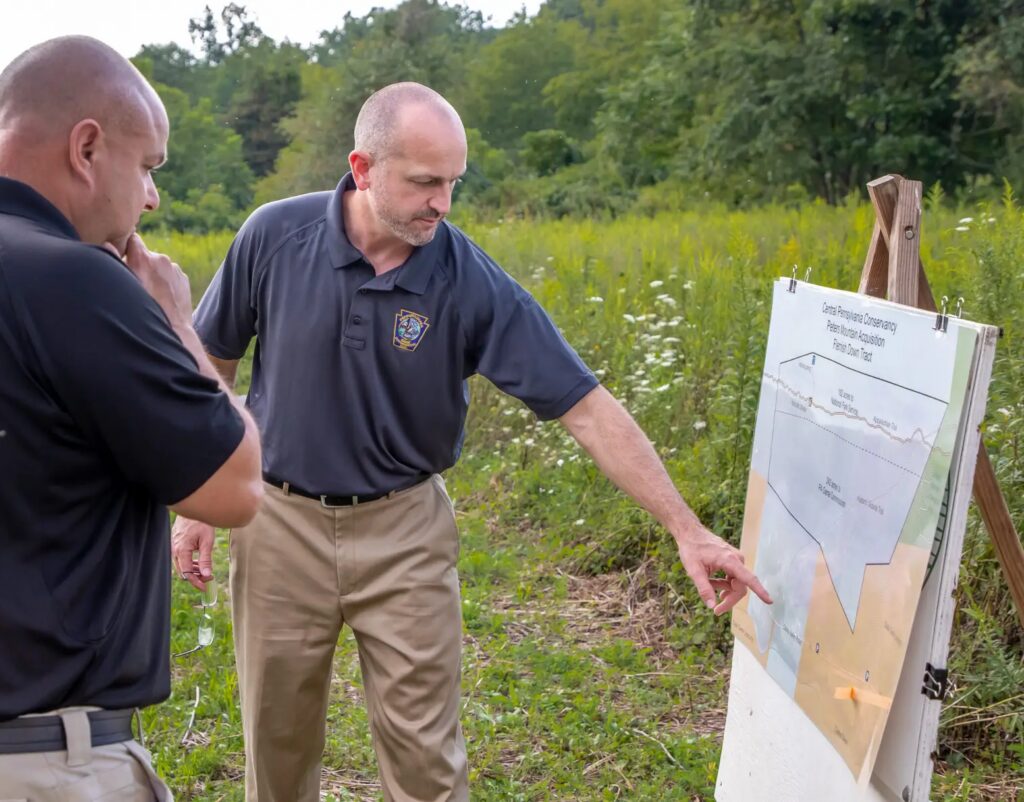
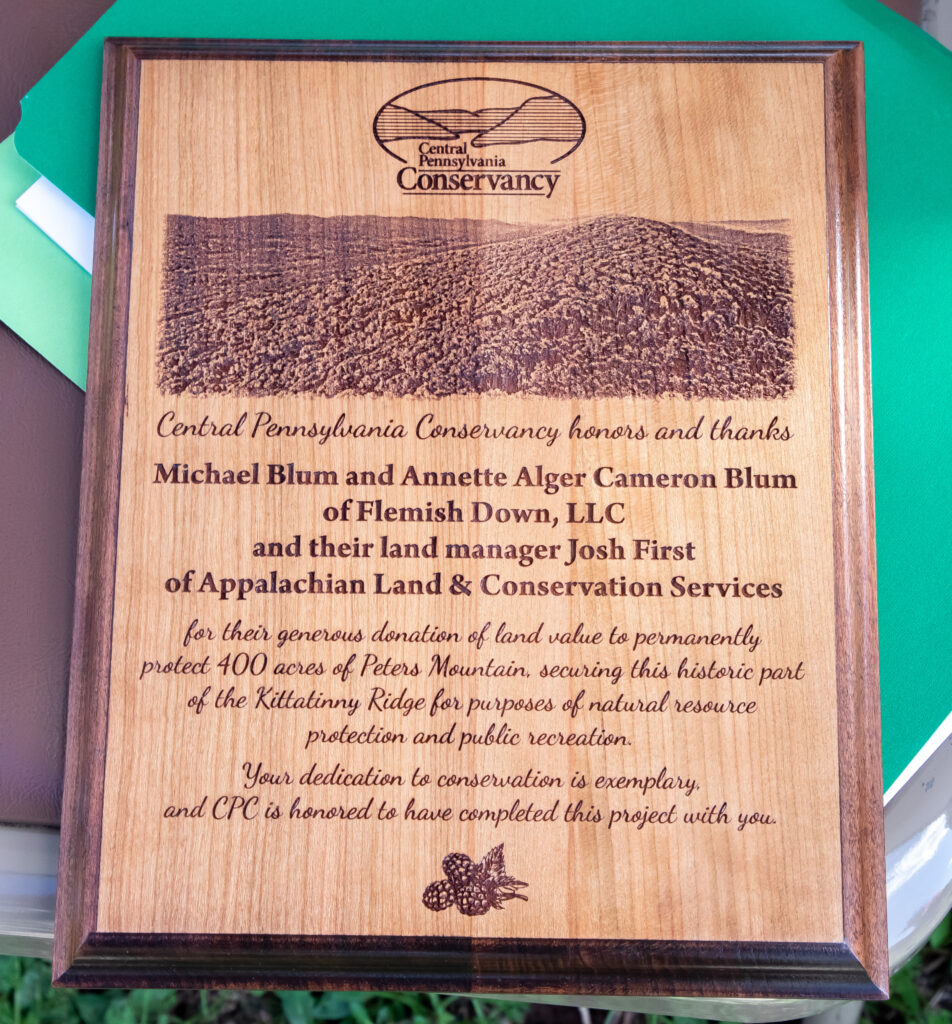
Protecting the Flemish Down/Peters Mountain parcels stands out as a highlight, with the Letort Spring Garden Preserve as a close second. During the challenges of the COVID era, we worked diligently to complete a bargain-sale acquisition with Flemish Down, permanently protecting 404 acres along the ridge and south face of Peters Mountain in Dauphin County. This property includes the iconic Peters Mountain shelter, an accessible natural spring, and land crossed by the Appalachian National Scenic Trail. It also borders thousands of acres already conserved and managed by the Pennsylvania Game Commission.
This project represents what a land trust can achieve at its best. We partnered with a conservation-minded landowner, subdivided and transferred 141 acres to the Pennsylvania Game Commission, and are currently working with the National Park Service on a land exchange on the remaining acreage that will permanently protect the Scott Farm in Cumberland County. Also located along the Appalachian Trail, the Scott Farm serves as a vital conservation hub, offering a stopover for hikers, a designated point on the Conodoguinet Water Trail, and a base for trail maintenance and volunteer training.
Looking ahead, we have exciting plans for the Scott Farm, including a future transfer to the Keystone Trails Association and a comprehensive site redesign that will provide facilities and storage for local conservation partners. It’s a project with lasting regional impact, and CPC is proud to play a central role in making it possible.